"Patience is a Super Power" - "The Money is in the waiting"
Showing posts with label oil. Show all posts

Wednesday, August 26, 2026

Build a Canadian strategic-resources portfolio that could benefit from deteriorating Canada-U.S. trade relations, Canadian export diversification, defence/energy security and the Western world's need for non-Chinese resource supply.


starting from a blank sheet today—August 26, 2026—and the mandate were simply:

Build a Canadian strategic-resources portfolio that could benefit from deteriorating Canada-U.S. trade relations, Canadian export diversification, defence/energy security and the Western world's need for non-Chinese resource supply.

My "Know Nothing About the Investor" portfolio

RankCompanyTickerStrategic resourceWeightThesis
1NutrienNTRPotash20%Exceptional Canadian leverage over U.S. agriculture
2CamecoCCOUranium20%Nuclear/energy-security winner
3Canadian Natural ResourcesCNQOil & gas15%Massive reserves + global diversification
4SuncorSUOil12.5%Integrated oil + export diversification
5Teck ResourcesTECK.BCopper12.5%Electrification/defence/AI infrastructure
6CenovusCVEOil & refining10%Heavy crude + integrated downstream
7EnbridgeENBEnergy infrastructure10%Owns the pipes rather than betting on commodity price

That is a considerably better risk-adjusted portfolio for an unknown Canadian investor.

Canada is actively pursuing exactly the broader strategy behind this portfolio: expanding global market access for Canadian oil, accelerating critical-mineral production and processing, and reducing excessive dependence on the United States. Ottawa's July agreement with Alberta and the oil-sands producers explicitly calls for expanded global market access and production growth.

But which companies could actually benefit from the trade war?

This is the more important distinction. Being strategically important doesn't automatically make a stock a trade-war winner.

#1 — Nutrien:

If forced to select one Canadian resource company whose strategic importance increases because of this dispute, I would pick Nutrien.

Canada is the world's leading potash producer. And the current U.S. tariff regime specifically exempts potash—an important signal that Washington recognizes how difficult it would be to disrupt that supply.

Nutrien therefore possesses something unusual:

pricing power + scarce resource + enormous U.S. dependence + global alternative customers.

If Canada diversifies additional potash toward Brazil, India and Asia, Nutrien isn't trapped by the American market.

That is genuine geopolitical optionality.

Trade-war beneficiary score: 9/10.


#2 — Cameco: perhaps the best long-term strategic asset

Cameco is somewhat different.

I wouldn't buy it because I expect Canada to restrict uranium exports. I don't.

I'd buy it because this trade conflict reinforces the value of secure, allied, non-Russian/non-Chinese nuclear fuel supply.

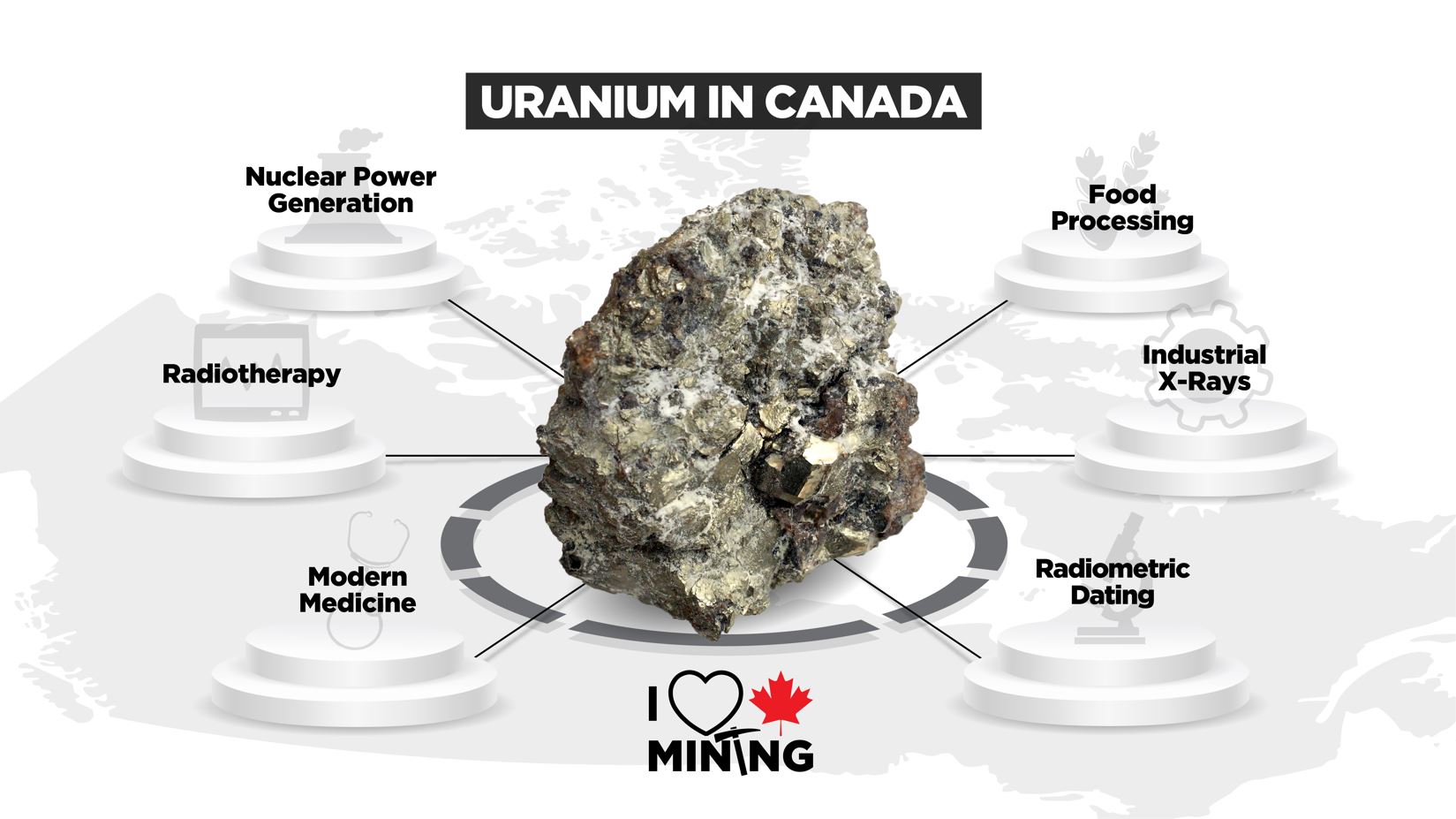
Canada is already the world's second-largest uranium producer, and Cameco's mines produce the purest uranium on the planet, by a factor 10

The enormous buildout of electricity generation required for AI/data centres plus Western nuclear restarts and energy-security concerns creates a structural uranium story independent of Trump.

The trade war merely strengthens the strategic premium attached to Saskatchewan uranium.

Trade-war/geopolitical beneficiary score: 9/10.


#3 — CNQ: my preferred Canadian oil producer

I would slightly favour Canadian Natural Resources over Suncor and Cenovus for this particular portfolio.

The key reason isn't retaliation.

It's market diversification.

Canada's long-standing problem was:

enormous oil reserves + essentially one customer.

TMX materially changes that equation, and Ottawa is now explicitly pursuing additional West Coast export capacity. The July federal-Alberta-oil industry agreement calls for expanded and diversified global market access and substantial oil-sands production growth.

That potentially increases the strategic value of enormous long-life Canadian reserves.

CNQ owns an extraordinary amount of them.

Score: 8.5/10.


#4 — Teck: the one I might overweight

Copper is an interesting case because it doesn't require Canada to weaponize anything.

Canadian copper exports to the United States have actually surged—running about 40% above their 2024 average, according to the Bank of Canada.

Meanwhile copper sits at the intersection of:

AI data centres + electrical grids + EVs + robotics + defence + renewable energy + conventional infrastructure.

That's exactly the sort of commodity I want exposure to regardless of whether the Canada-U.S. dispute gets better or worse.

And that gives Teck an attractive characteristic:

The thesis doesn't require the trade war to continue.

If Canada-U.S. relations improve, copper demand remains.

If relations deteriorate and Canada accelerates trade with Europe and Asia, Teck has global customers.

If Western countries accelerate strategic-resource investment, copper benefits again.

Score: 8.5/10.


What about Microcaps like Ucore and Canada Nickel?

This is where knowing nothing about the investor makes the biggest difference.

I wouldn't put either into the seven-stock core portfolio.

Not because I dislike them.

Because they represent something fundamentally different.

Ucore (UCU) is essentially a venture-style bet on successful commercialization and scaling of rare-earth separation infrastructure.

Canada Nickel (CNC) is substantially a project-development/execution/financing bet.

Neither belongs in the same risk category as CNQ, Nutrien or Cameco.

Canada is unquestionably pushing this sector aggressively. Ottawa announced more than C$3.6 billion of new critical-mineral programs and investments this year, while its Critical Minerals Strategy now has roughly C$3.87 billion allocated and explicitly contemplates equity investments, loan guarantees, offtake agreements and strategic stockpiling.

That creates potentially enormous upside for the right development-stage company.

But enormous strategic importance doesn't eliminate:

financing risk, dilution risk, construction risk, technology risk, permitting risk and execution risk.

So I'd put Ucore/CNC into a separate 5–10% speculative satellite allocation, rather than pretend they're equivalent to Nutrien or Cameco.


There's also a company I'd reconsider: Enbridge

ENB isn't going to produce enormous alpha merely because Canada and the United States quarrel.

In fact, its integrated North American footprint makes a serious trade rupture undesirable.

But that's precisely why I like it in the portfolio.

If the thesis turns out to be wrong—Trump and Carney reach an agreement and the trade war largely disappears—Enbridge doesn't suddenly lose its investment case.

It gives the portfolio ballast.

Think of it as:

NTR/CCO/TECK = strategic-resource growth

CNQ/SU/CVE = energy/resource diversification

ENB = infrastructure/income stabilizer

That's a much more coherent construction.


What changes my perspective

I would stop thinking about this as a "stocks Canada can weaponize against America" portfolio.

That's too narrow.

I'd instead invest in:

"Resources the world increasingly needs that Canada can sell to more than one customer."

That distinction is crucial.

Canada's weakness isn't lack of resources.

It's historically been customer concentration.

Even today, the United States takes approximately 57% of Canada's critical-mineral exports, worth about C$28.8 billion in 2025.

The emerging Canadian strategy is therefore not simply retaliation against America. It's:

produce more → process more in Canada → build Pacific/Atlantic infrastructure → diversify customers → develop allied supply chains → reduce U.S. dependency.

Natural Resources Canada's current 2026–27 plan explicitly calls for vertically integrated critical-mineral supply chains, strategic stockpiling and partnerships with G7 and NATO countries.

That is a much more durable investment thesis than betting on tariffs.

Therefore, knowing nothing about the investor, my top five would be:

1. Nutrien — NTR ★★★★★
2. Cameco — CCO ★★★★★
3. Canadian Natural Resources — CNQ ★★★★½
4. Teck Resources — TECK.B ★★★★½
5. Suncor — SU ★★★★

And if someone told me, "Forget diversification; give me the three Canadian stocks with the best combination of strategic importance, secular growth and potential upside from Canada's economic realignment," I would narrow it further to:

NTR + CCO + TECK.B

That's actually the three-stock Canadian strategic-resource basket I find most interesting right now. It gives you food security + nuclear/energy security + electrification/industrial security without requiring the Canada-U.S. trade war to get worse for the investment thesis to work.

Monday, March 3, 2025

Commodities are often overlooked in a young investors portfolio. They should not be!


 Investors looking for stability and lucrative returns over the next two years, I would rank these natural resources in the following order, considering supply-demand dynamics, geopolitical risks, energy transition trends, and industrial importance:

Ed Note: 

We are currently invested in companies producing 5 of these commodities.

1. Uranium

  • Bullish Case: Nuclear energy is experiencing a renaissance, with increasing global support for clean energy. Supply is constrained, and demand is rising with new reactor projects and small modular reactors (SMRs).
  • Key Players: Cameco (CCJ), Kazatomprom, NexGen Energy (NXE).
  • Risk: Some policy risks if governments shift focus.

2. Copper

  • Bullish Case: Essential for electrification (EVs, power grids, renewables), and long-term supply deficits are expected due to lack of new mines. Prices have remained strong.
  • Key Players: Freeport-McMoRan (FCX), Southern Copper (SCCO), BHP.
  • Risk: Short-term recession could dampen demand.

3. Oil

  • Bullish Case: Despite the energy transition, oil demand remains strong. OPEC+ supply cuts and geopolitical risks (Middle East conflicts, Russia sanctions) keep prices elevated.
  • Key Players: ExxonMobil (XOM), Chevron (CVX), Saudi Aramco.
  • Risk: Demand destruction if global economic slowdown occurs.

4. Natural Gas

  • Bullish Case: Europe's pivot away from Russian gas, LNG export growth (U.S. to Europe/Asia), and continued reliance on gas as a transition fuel.
  • Key Players: Cheniere Energy (LNG), EQT Corp (EQT).
  • Risk: Overproduction could lower prices, mild winters reduce demand.

5. Lithium

  • Bullish Case: EV demand remains strong, but overproduction has led to price volatility. Long-term supply chain constraints could tighten the market again.
  • Key Players: Albemarle (ALB), SQM, Lithium Americas (LAC).
  • Risk: High volatility, price declines if demand slows.

6. Rare Earths

  • Bullish Case: Critical for defense, electronics, and EVs. China dominates supply, but Western nations are ramping up production. Supply chain security remains a priority.
  • Key Players: MP Materials (MP), Lynas Rare Earths (LYC).
  • Risk: Geopolitical uncertainty; rare earth processing is complex.

7. Nickel

  • Bullish Case: Needed for EV batteries and stainless steel. Supply disruptions in Indonesia and Russia could support prices.
  • Key Players: Vale (VALE), Norilsk Nickel, BHP.
  • Risk: EV battery chemistry shifting away from high-nickel designs.

8. Gold

  • Bullish Case: Inflation hedge, central bank demand, and safe-haven asset during global uncertainties.
  • Key Players: Barrick Gold (GOLD), Newmont (NEM).
  • Risk: Interest rate cuts could impact returns.

9. Water

  • Bullish Case: Scarcity makes it an essential resource. Water infrastructure, desalination, and privatization could drive investment.
  • Key Players: American Water Works (AWK), Veolia (VEOEY).
  • Risk: Regulatory constraints on private water ownership.

10. Potash

  • Bullish Case: Fertilizer demand is steady due to global food security concerns.
  • Key Players: Nutrien (NTR), Mosaic (MOS).
  • Risk: Agricultural cycles can impact demand.
  • .

Final Thoughts:

For a balanced, stable, and profitable investment in natural resources over the next two years, Uranium, Copper, and Oil seem the strongest plays due to demand-supply imbalances and global energy trends. Natural Gas and Lithium are also good, but face short-term price volatility. Rare Earths and Nickel are critical, but geopolitical risks and tech advancements could impact pricing. Gold, Water, and Potash are more defensive but lack aggressive upside.

Monday, February 3, 2025

In a heated and escalating trade war with Canada, how would an export tax levied by Canada on all it's natural resources entering the USA affect American business and society


Below is a high-level assessment of how a hypothetical 25% or 50% Canadian export tax on all Canadian natural resources—oil, gas, metals, minerals, lumber, agricultural commodities, and even fresh water or hydro power—could affect the U.S. economy. This scenario represents a highly escalated trade conflict that would likely be unprecedented given the integrated nature of North American supply chains and the long-standing Canada-U.S. trade relationship.


1. Immediate Price and Inflation Impacts

  1. Spiking Input Costs

    • U.S. companies reliant on Canadian resources (oil, gas, uranium, metals, potash, etc.) would face significantly higher costs.
    • These cost increases would ripple through numerous industries—energy, manufacturing, construction, and agriculture—ultimately raising consumer prices.
  2. Widespread Inflationary Pressure

    • The U.S. would see broad-based inflation if major raw materials become more expensive or scarce.
    • Higher costs for fuels (gasoline, diesel, jet fuel), metals (steel, aluminum, copper), and agricultural inputs (wheat, potash fertilizer) would feed into nearly every segment of the economy.
  3. Potential “Price Shocks”

    • Resources where Canada is a top supplier (e.g., potash for fertilizer, certain heavy crude oil grades, certain rare earths) could experience short-term shortages in the U.S., causing severe price spikes until alternative sources are found (if feasible).

2. Sector-by-Sector Effects

  1. Energy Sector


    • Oil and Gas:
      • Canada is a leading oil exporter to the U.S., especially heavy crude from Alberta. A 25% or 50% export tax would sharply raise import costs for U.S. refiners.
      • Many refineries, especially along the Gulf Coast and in the Midwest, are optimized for heavier Canadian crude—switching to lighter U.S. shale or other foreign supplies is not straightforward.
      • Natural Gas: Pipeline gas from Canada serves parts of the northern U.S.; higher import costs would raise heating and industrial process costs.
    • Hydroelectric Power:

      • Certain U.S. border states import Canadian hydro power. An export tax would raise electricity costs in those regions.
  2. Metals and Minerals

    • Canada is a major source of nickel, copper, zinc, aluminum, iron ore, gold, silver, and uranium for the U.S.
    • Canada is the worlds #2 producer of Uranium (nuclear energy) and, Canada has the world's largest deposits of high-grade uranium, with grades of up to 20%, which is 100 times greater than the world average.

    • A steep export tax could disrupt U.S. manufacturing (e.g., cars, aerospace, electronics) and defense (e.g., uranium for nuclear reactors, key metals for military equipment).
    • Prices of consumer products relying on these metals (from cars to electronics) would likely increase.


  3. Agriculture and Food

    • Wheat, Meat, Seafood, Maple Syrup, etc.:
      • If these exports faced a 25%–50% tax, U.S. wholesalers and consumers would likely pay significantly more for Canadian wheat, beef, pork, fish, and specialty items (e.g., maple syrup and Lobster).
      • Certain regional markets in the U.S. (e.g., northern states) rely heavily on cross-border supply for fresh or specialty goods (ie: Seafood).
  4. Fertilizer (Potash)


    • Canada is the world’s largest producer of potash, a key fertilizer ingredient. A hefty export tax could raise costs for U.S. farmers significantly, impacting crop yields and food prices.
  5. Lumber and Forestry Products


    • Canada is a major exporter of softwood lumber and other wood products.

      A steep export tax drives up construction costs in the U.S., affecting everything from homebuilding to renovation industries.
  6. Fresh Water Exports (in bulk) Canada has 9% of worlds fresh water supply


    • While large-scale bulk water exports are minimal or highly regulated, any new tax on water or hydro resources would raise utility costs in cross-border communities.(Also fracking, as in America's shale operations, requires massive amounts of fresh water)

3. Supply Chain Disruptions and Reconfiguration (USA)

  1. Search for Alternative Suppliers

    • U.S. companies would scramble to find replacement sources—domestically or overseas—for critical inputs (heavy crude, metals, potash, lumber).
    • This process can be time-consuming and may come with higher transportation/logistics costs.
  2. Retooling and Capital Investment

    • Refiners configured for heavy Canadian crude might face expensive refitting to process lighter oil or other blends from countries like Venezuela, Saudi Arabia, or Mexico (all with their own geopolitical or supply constraints).
    • Manufacturers dependent on Canadian metals (like nickel or aluminum) might shift supply chains to other countries, though quality, reliability, and shipping costs vary.
  3. Trade and Policy Uncertainty

    • The fear of future escalations or shifting tariffs can freeze investment decisions, delaying expansion or hiring in affected sectors.
    • Multinational companies operating on both sides of the border might re-evaluate where to locate production facilities.

4. Impact on U.S. Consumers and Businesses

  1. Immediate Cost Pass-Through

    • Companies facing a sudden 25%–50% cost increase on Canadian resources will pass as much of that cost as possible onto consumers—leading to higher prices for energy, groceries, goods, and services.
  2. Potential Job Losses

    • While some U.S. resource producers might enjoy a temporary competitive edge, many businesses reliant on Canadian inputs could see profit margins squeezed or lose competitiveness (especially if they export finished goods to other markets).
    • Supply chain disruptions often lead to factory slowdowns, reduced output, and in some cases layoffs.
  3. Inflationary Pressure and Reduced Purchasing Power


    • As prices rise, American households and businesses have less disposable income to spend on non-essential goods, possibly slowing overall economic growth.

5. Geopolitical and Long-Term Consequences

  1. Severe Strain on Bilateral Relations

    • A blanket 25%–50% export tax on all Canadian resources is an extreme measure that signals a deep breakdown in trade relations. The resulting tension could spill over into defense, security, and diplomatic realms.
  2. Undermining USMCA (Formerly NAFTA)


    • This move would eviscerate the spirit of the U.S.-Mexico-Canada Agreement and likely prompt complex legal battles.
    • Retaliation and counter-retaliation could spiral, damaging the integrated North American economy.
  3. Acceleration of Resource Self-Sufficiency or Alternate Sourcing

    • Over the long term, the U.S. might invest more heavily in domestic mining, energy production, or forging new trade deals with other countries.
    • Canada’s potential leverage is highest in the short to medium term, before U.S. producers scale up or alternative suppliers emerge.

Conclusion

A 25%–50% export tax on all Canadian natural resources would pose a significant economic shock to the United States:

  • Energy and industrial supply chains would face immediate cost inflation, especially for heavy crude, metals, potash, and lumber.
  • Consumers and businesses would encounter higher prices on everything from fuel and electricity to cars and groceries, fueling inflation.
  • Supply chain disruption would be severe, compelling U.S. companies to retool or seek alternative suppliers, processes that are costly and time-consuming.
  • The overall U.S. economy could face slower growth, job losses in industries reliant on Canadian inputs, and a potential inflationary spiral if retaliation escalates.

In short, while a few domestic resource producers in the U.S. might see short-term gains, the vast majority of the U.S. economy would feel pain from such a sweeping Canadian export tax—a drastic measure that signals a major breakdown in the traditionally cooperative Canada-U.S. trade relationship.

GOT GOLD?

Agnico Eagle Gold is a top 3 Gold miner on the world stage now, and, it's still growing!


GOT BOTS?

Monday, April 18, 2011

Skywest Energy Corp (OIl and Gas) 100% success in drilling results and increase in production.

Oil DrillerImage via WikipediaSkyWest Energy Corp.

TSX VENTURE: SKW

Apr 18, 2011 09:00 ET


CALGARY, ALBERTA--(Marketwire - April 18, 2011) - SkyWest Energy Corp ("SkyWest", "we", "us", "our" or the "Company") (TSX VENTURE:SKW) is pleased to announce we have filed on SEDAR our audited financial statements and related Management's Discussion and Analysis ("MD&A") for the year ended December 31, 2010. Selected financial and operational information is outlined below and should be read in conjunction with our audited financial statements and the related MD&A which are available for review at www.sedar.com.

FINANCIAL AND OPERATING HIGHLIGHTS
Our 2010 year end results include approximately six months of production from the reverse take-over of EMM Energy Inc. and 15 days of production from the acquisition of Base Resources Inc. The year-end results also include 5 operated Cardium horizontal oil wells which were brought on production in 2010 with 4 of the 5 being brought on in December 2010.

Wednesday, April 13, 2011

Carbon Sciences Engages Industry Experts to Accelerate Commercial Development

Se belowImage via Wikipedia
Gas-to-Liquid Experts to Assist in Commercial Catalyst Design and Process Engineering

Santa Barbara, CA - April 13, 2011 - Carbon Sciences, Inc. (CABN), the developer of a breakthrough technology to make transportation fuels from natural gas, today announced a development agreement with Emerging Fuels Technology (EFT), Tulsa, Oklahoma.

Wednesday, March 16, 2011

Science - Making gasoline from greenhouse gases moves into testing phase.

Carbon Sciences Begins Performance Testing of Breakthrough Catalyst in Commercial Facility

Company’s Catalyst is Key to Solution for Replacing Petroleum as a Source of Transportation Fuels

Santa Barbara, CA - March , 2011 - Carbon Sciences, Inc. (CABN),
the developer of a breakthrough technology to transform greenhouse gases into gasoline and other portable fuels, today announced the commencement of the testing of its dry reforming of methane technology in a commercial facility.

Byron Elton, Carbon Sciences’ CEO, commented, “We recently announced an aggressive 2011 development plan. The first step is the performance testing of our breakthrough catalyst in a commercial facility with multiple reactors using protocols required by the oil and gas industry. We have recently engaged a commercial testing firm to perform this task. The equipment build out is underway and actual testing will commence shortly. The results from this exercise will provide us with valuable data for starting the design of a commercial grade catalyst.”

Thursday, January 27, 2011

Cougar Oil and Gas upgraded in Analysts estimates - Alberta Oil Sands Junior seeks AMEX listing!

Oil and Gas Investors Reacting to Positive Corporate Developments

NEW YORK--(BUSINESS WIRE)-- (Investrend Research Syndicate) -- Ernest C. Schlotter, a senior analyst with Zurich, Switzerland-based SISM Research and a four star analyst according to StarMine, has issued an update on Cougar Oil and Gas Canada, Inc. (OTCBB: COUGF) in a four-page report dated January 24, 2011, which includes an updated 18-month stock target valuation and analyst's rating/recommendation.

The full report includes important disclosures, disclaimers and analyst information. Investrend and SISM Research both advise investors to exercise a reasonable degree of due diligence before trading in the equities of any public company, including carefully reading entire analyst reports and report disclosures, and then only in conjunction with advice from a registered financial advisor or broker. Investrend and SISM Research both further advise that any analyst rating, recommendation, target valuation, price target or opinion should be considered merely a portion of an investor’s total investigative process. More about ratings and valuations is available via Investrend (at http://www.investrend.com/ratings).

A complimentary copy of the report is available for download via Investrend Syndications (at http://www.investrend.com/sism) as well as via the SISM Research website (at http://www.sism.com/researchreportscougar.htm).

According to Schlotter’s report: